

Ok it may not be as popular as fireworks on the Fourth of July, but using sunscreen in the summer is more imperative than ever. Yet, not all sunscreens are healthy for us. In fact, some ingredients are so toxic, other countries have banned them or set limits on how much can be added to personal care products. In the US, however, the FDA regulates sunscreens and they are very slow on implementing such restrictions.
So once again it’s up to us to weed out what’s safe and what’s not. When you’re out on the boat, or going for a swim, how do you decide which sunscreen is safe or not? Essentially, you want to select a sunscreen with zero toxins, carcinogens, endocrine disruptors, or thyroid toxins. This is especially important if you like to use spray sunscreens.
SPRAY SUNSCREENS and INHALATION RISK
Spray sunscreens create a whole new set of problems for our health. Many spray varieties tested by scientists contain Benzene1, though benzene is not identified as an ingredient on the labels. It’s believed it may occur in the manufacturing of the formulas. In addition, spray sunscreens drift so much, that depending on the wind, as little as 20% of what is sprayed actually makes contact with our skin. The rest, up to 80% can become an inhalation hazard! This means we’re breathing it in, inhaling it, and swallowing it, as well as absorbing it through the skin, not to mention any drift that lands on little creatures and insects nearby. This is a category of risk that’s not-yet-been fully tested nor is it fully understood how much this may increase our risk of disease longterm.
Drift and inhalation hazard from sunscreens is as dangerous and comparable as pesticide drift, which is known to cause birth defects, cancer, and a wide range of health problems for children, adults, animals, pollinators, and plant life. For children and those with less body mass, these toxins can add up quick. If the spray bottle in use is one of the more toxic brands, double the trouble for people and planet.
CHOOSING A HEALTH-FRIENDLY SUNSCREEN
Rule of thumb, brands labeled “Reef-Safe” are your best bet for health-safe. These contain mineral UV filters like zinc oxide. They also do not contain nanoparticles–which are a growing threat to human and planetary health. To the best of scientists’ knowledge, these reef-safe brands do not harm animals, coral reefs, or humans. if you’re opting for a spray sunscreen, any identified as “Reef Safe” are the type that’s best to select.
LET’S SIMPLIFY
To make things simple, here’s a quick display so you can have peace of mind knowing you’re choosing a good brand that’s health-friendly rather than hazardous.
REEF SAFE BRANDS INCLUDE:

PRODUCTS TO AVOID— these are anti-health!
The products to avoid contain toxic ingredients that increase risk of tumors and cancer, as well as cause great harm to coral reefs and water quality. The extent of damage these types of sunscreens are causing to people and planet is not completely understood yet, but one thing is for certain, they are not offering any benefits. As much as possible, avoid these brands and instead, find yourself and your family “reef-safe” sunscreen made with less risky ingredients.
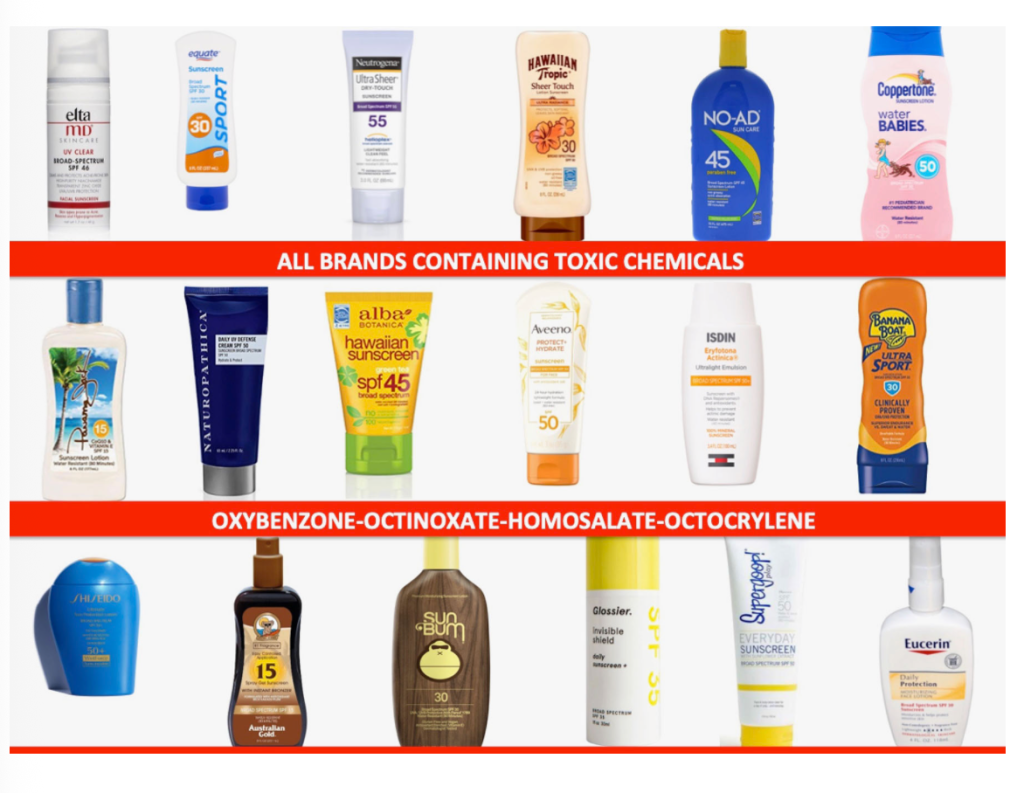
WHAT SHITTY TOXIC INGREDIENTS ARE IN THESE FORMULAS YOU ASK?
- Avobenzene–endocrine disruptor–hormone disruptor- gender bender
- Benzene: Carcinogen (found in almost ALL spray sunscreens)
- Cinoxate–flagged as endocrine disruptor
- Dioxybenzone–estrogenic effect– endocrine disruptor
- Ensulizole–damages DNA, carcinogen
- Homosalate–endocrine disruptor
- Meradimate–cardiovascular and thyroid toxin
- Octinoxate-endocrine disruptor–Banned in Hawaii
- Octisalate-endocrine disruptor
- Octocrylene- endocrine disruptor
- Oxybenzone–endocrine disruptor-Banned in Hawaii
- Padimate O- endocrine disruptor
- Sulsobenzone- endocrine disruptor
- Nanoparticles of titanium dioxide–cell damage, inflammation, carcinogen risk
- Nanoparticule of zinc oxide– cell damage, inflammation, carcinogen risk
- Nanoparticles–“Nano-titanium and nano-zinc particles may be absorbed by the human body and the aquatic environment. They cause oxidative stress (think free radicals) that may lead to cell damage, genotoxic effects, inflammatory responses and changes in cell structure. “Current legislation does not require labeling whether the products contain nano-sized titanium dioxide or zinc oxide.”2
- Methoxycinnamate–International Chemical Secretariat’s SIN (Substitute it Now) list
- Camphor–International Chemical Secretariat’s SIN (Substitute it Now) list
- other ingredients not mentioned like surfactants and those found in shampoos can pose a threat to delicate marine life as well.
That’s all for now.
Happy 4th of July!
Have fun and stay safe out there!
SOURCES
https://savethereef.org/about-reef-save-sunscreen.html
https://www.ewg.org/sunscreen/report/executive-summary/
Footnotes:
1. https://www.ewg.org/sunscreen/beware-of-benzene-shining-a-light-on-sunscreen-spray-contamination/
Discover more from Wecologist
Subscribe to get the latest posts sent to your email.
